Permission to grieve AND be merry this festive season...

Christmas can be hard when you’re grieving. So many moments are tinged with sadness – maybe Mum would normally come with you and the kids to see Santa, maybe your husband made the best mince pies… We probably all have memories of our loved ones at Christmas taking part in various traditions or simply just being present, and now all that we are left with are the memories. We often have an ideal of what Christmas “should” be like, reinforced by films and TV specials, and it can feel like this is unachievable when we lose somebody that we love (not to mention how unachievable these ideals often are in the first place…). Read my blog full of offerings of Christmas support here.
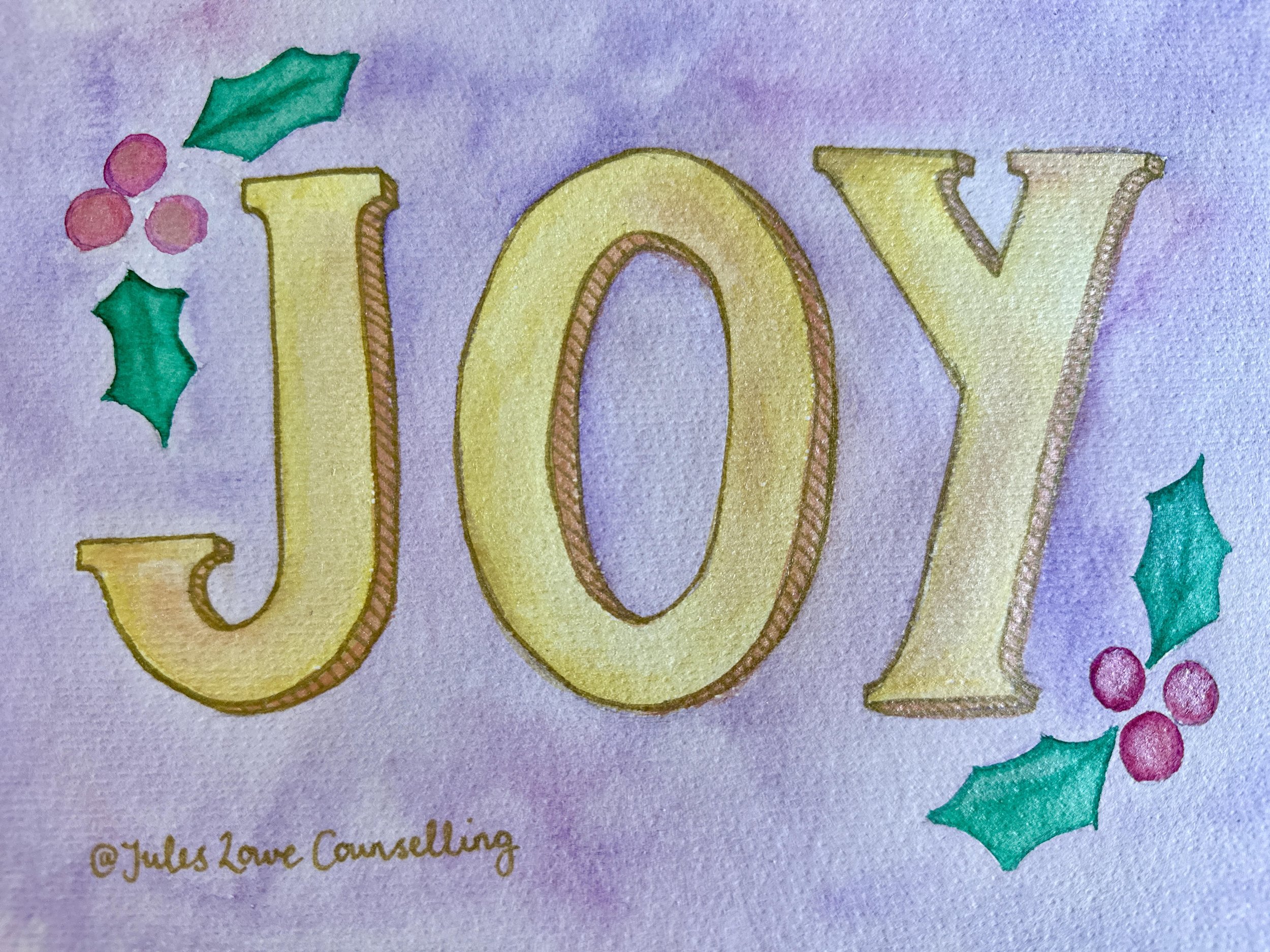
Grief and Joy CAN co-exist @Jules Lowe Counselling
However, I also find that many grievers struggle with the opposite – they find themselves actually enjoying themselves, and this sometime somehow feels worse. They feel that they “shouldn’t” be having fun when they “should” be grieving, and then start feeling guilty about laughing or smiling or doing anything that might bring them joy. We humans are so prone to feeling guilty when we haven’t actually done anything wrong, and grief seems to bring on the guilt in snowballs. How can I be having fun when I’m supposed to be grieving? What if they could see me dancing at the Christmas party or visiting Santa with my children and I wasn’t sad – would they think I didn’t care?
But what if I told you it was actually healthy to take a break from grief? That it can actually help the grieving process if we have moments of joy and laughter, rather than staying griefy all of the time? The Dual Process Model suggests that it is healthy to move between moments of feeling full of grief, despair and sadness (what Stroebe and Schut call the “loss orientation”) and moments of navigating our new lives without them (what they call the “restoration orientation”). Part of this involves denying the grief, if just for a short time. Now if we’re stuck in the restoration orientation and completely ignoring the grief, then yes, it’s worth trying to become unstuck and feeling the grief every so often, however painful it may feel (and I’m here to support you). But a dose of denial is needed at times – our bodies and our minds need it to cope, because being stuck in a land of grief and despair and pain all of the time is exhausting and sometimes we need a break.

Continuing Bonds can be seen as the ripples our loved ones continue to make once they have gone @Jules Lowe Counselling
One of the fears that I often hear is that grievers think they might forget their loved one. If they leave the world of feeling griefy (the loss orientation of the Dual Process Model) for just a short time they fear that they may never return to it, and this feels like saying a final goodbye. Reader, you are so unlikely to forget your loved one. I haven’t heard of it happening yet. You may feel like you are moving away from them, that you are starting to forget their voice, for instance, but you will never forget everything about them, and there are so many ways to help continue to remember them – and my Continuing Bonds blog has a few suggestions.
Another fear is that other people may forget that you are grieving. And sadly, this can sometimes be true. People around us can be so desperate for us to be ok, to not be in pain, that they can assume we’re ok now as soon as they see any evidence that we might be. I especially find this with younger clients, who have friends who through no fault of their own simply cannot comprehend the complexity of what it is like to grieve, but I see it with older clients too, and this can feel even more disappointing. The pressure can so often be put on the griever to point out that it is possible to feel joy and grief at the same time, and again this takes so much effort that it’s just easier to express one emotion.
The reality is that grief and joy can coexist and often do. That Christmas Party? You can hear the classic Christmas bops but now there’s a grief radio playing too, nostalgic tunes bringing warmth and bittersweet memories all at the same time. The visit to Santa? The look of awe and wonder in your children’s eyes is still magical and priceless, but it’s still tinged with the sadness that the special person that came with you to visit Santa hasn’t turned up this year. Or they have, but now it’s in the form of the elephant in the room. But also sometimes, it’s OK just to feel whatever emotion we’re feeling and just accepting that that’s how we’re feeling, without considering whether we “should” be feeling it, because there is no right or wrong way to grieve.
Grieving at Christmas can be hard enough without adding yet more guilt into the mix. If we think of grief as a rock, well, sometimes it’s so heavy that we need to put it down occasionally. We can put it down over Christmas and know that we’ll be picking it up again afterwards. It’s not going anyway, we can’t sweep it under the carpet however much we might try, but it’s ok to put it down to rest for a while. It’s ok to have fun, and to seek some comfort and joy this festive season where we can xx
Finding the build up to Christmas hard?