What if I drown?
When the waves of loss feels overwhelming…
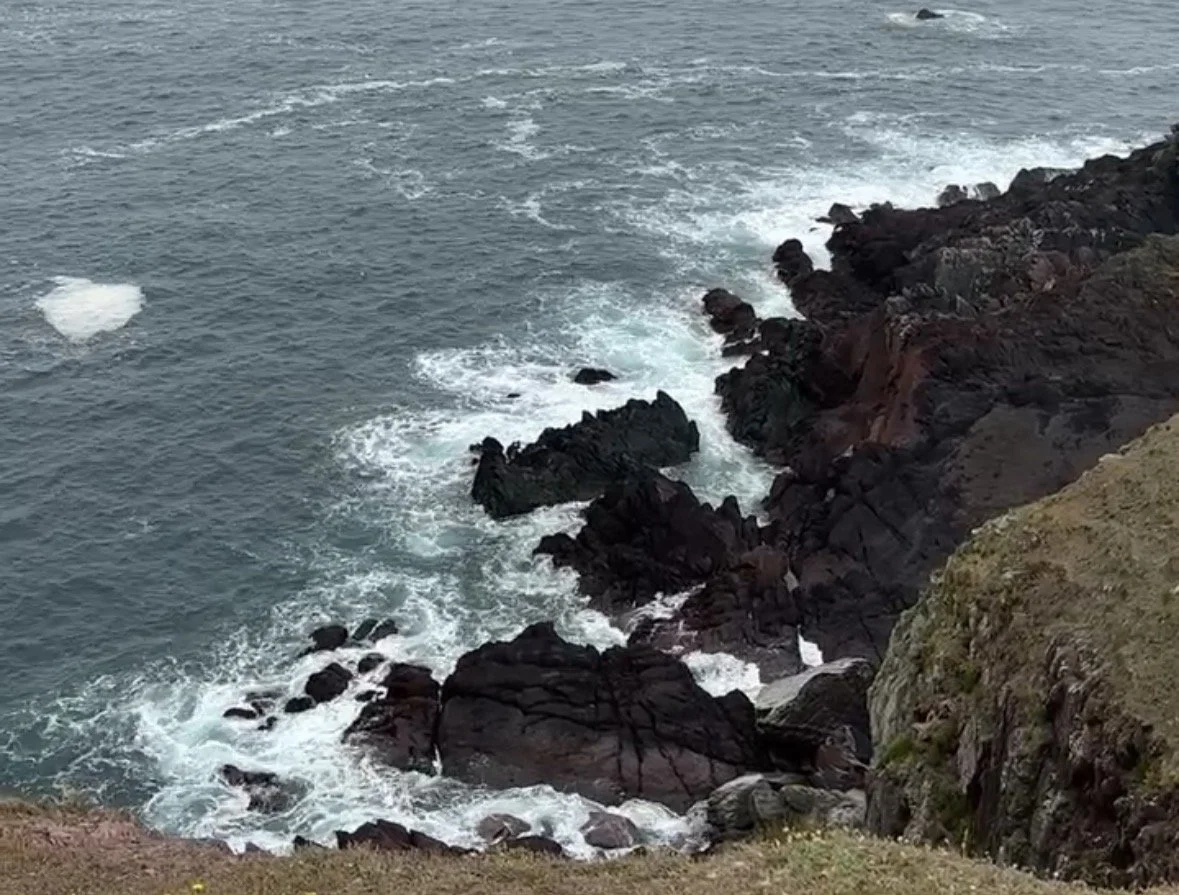
I often get clients coming to me saying that they don’t dare grieve at all as they fear that once they start they won’t be able to stop. That if the tears come, they’ll never end. They’ll come to me wracked with guilt – they should have done something to stop it happening – or anger – because this feels so unfair. These emotions are still uncomfortable, but they make us feel like we have some control. Both guilt and anger give us energy to DO something – we’d do it differently if we could. But when the realisation hits that we couldn’t have done anything differently, we are left with grief. And with grief it feels like there is no control – there’s no energy for change; it’s just overwhelming sadness.
Grief is often described as coming in waves – the idea that sometimes it will feel intense and other times there will be moments of calm where everything feels ok (my blog on this describes the Dual Process Model, which suggests that it is natural to move between the loss orientation, where we feel the true despair and pain of the loss, all snotty tears and sadness, and the restoration orientation, where we focus on rebuilding our life without the person or thing that we’ve lost). We will feel waves of sadness knowing that this too shall pass, but the wave of loss can feel incredibly daunting, especially if we’ve never experienced it before. What if we simply cannot stop crying? What if the grief overwhelms us completely and we drown? The thought can feel suffocating, like there is no escape.

Support is available - you don't have to do this alone @Jules Lowe Counselling
And yet however overwhelming it can feel, you don’t need to do it alone. Grief can feel very lonely; it can feel like nobody is experiencing it exactly as you are. I believe that this is partly because we are all shaped our different experiences, and so nobody IS experiencing it exactly how you are. However, there are people who have experienced something similar, and who are willing to find out how it feels for you – people like me! I can be there to support you, to be your buoyancy aids if you will, making sure you keep afloat as you learn to ride the waves. I know I can get out of the loss orientation because I’ve been there many times, and I also have the evidence of seeing others do the same. Eventually, you won’t need me as you’ll have your own buoyancy aids – you’ll have experienced it enough to know that you can get out, that this too shall pass. You may not even need support from others as the ability to float can come from within, but it’s also totally ok to lean on others for support when you need it.
It makes me think of the wave machine in the pool we used to visit when on holiday as a child. I know it was supposed to be fun, but I used to be petrified when it started, seemingly unannounced. Instantly I’d panic, thinking the water would completely overwhelm me and I wouldn’t be able to cope. But the more I experienced it, the more I realised I could let it wash over me, and that as long as I took measures to stay safe, I’d be fine (I might even enjoy it…). As a child I wasn’t alone – I’d always have someone with me to make sure I was ok. And eventually I was able to remind myself of all the times I’d coped before. Just like when a wave of grief arrives: we can remind our brain that this feeling is grief, we know this feeling and we know that it too shall pass. At the time it can feel like it will last forever, and it can often feel like no two waves are exactly the same, but the feeling is familiar and experience tells us it will calm again soon.

I can help you learn to ride the wave, rather than resist it @Jules Lowe Counselling
But why face the wave? Why go there when you could bury yourself in the sand and avoid it? Well one, if we succeed in fully burying our head in the sand we risk missing out on everything – the good as well as the bad. We risk missing out on the joys that life can still bring, and we also miss out on remembering all of the wonderful things about that person (or thing). Then there’s the fact that those waves of grief are still there, and if we try to resist them and fight them, we end up using way more energy than if we let them wash over us. The more we resist, the more the wave builds up and becomes bigger and bigger, until one day we can hold it back no longer and it comes crashing down over us. This can especially happen with what we call cumulative grief – when a number of losses all pile up on one another and make each one feel worse than the last. So we may manage to completely avoid processing the loss of our father, for instance, until twelve years later when our mother dies and the wave of grief we’re trying to resist is the combination of both and it’s too hard to hold back on our own.
A lot of the work I do with clients involves “going there” – looking at the events and emotions and giving them air rather than trying to pretend they’re not there. This can feel painful, and I see my job as being a witness to this so you don’t have to be alone as you do this, whilst showing compassion and an understanding of how human it can be to feel whatever you are feeling. There is also great power in developing ways that we can control the waves to a certain degree. Yes, sometimes you will be hit with a wave when you least expect it, but there are other times when we can prepare – like deciding how much space we give to an upcoming anniversary or birthday. We can also sometimes control when we have “griefy time” – by listening to a piece of music, for instance, and knowing that we can press pause at any time, or creating a memory box with a lid that we can choose to open and close when we see fit. We can find a way that works for you – not “fixing” the grief or getting rid of it, but rather accepting that the waves will come but they will also pass, and we can handle them.
Ready to start facing the waves? Get in touch for a free initial call to discover how we can work together.